
How to Choose Your Bridal Mehndi Design
 By Vijay, mehndi artist since 2010 · Updated 24 Oct 2026
Brides usually open the gallery, save forty photos and then feel more confused than before.
Choosing a bridal mehndi design gets much easier if you make the decisions in the right order: coverage, theme, then the details. This is the order Vijay walks brides through at his studio in Sector 35D, Chandigarh.
1. Decide the coverage first
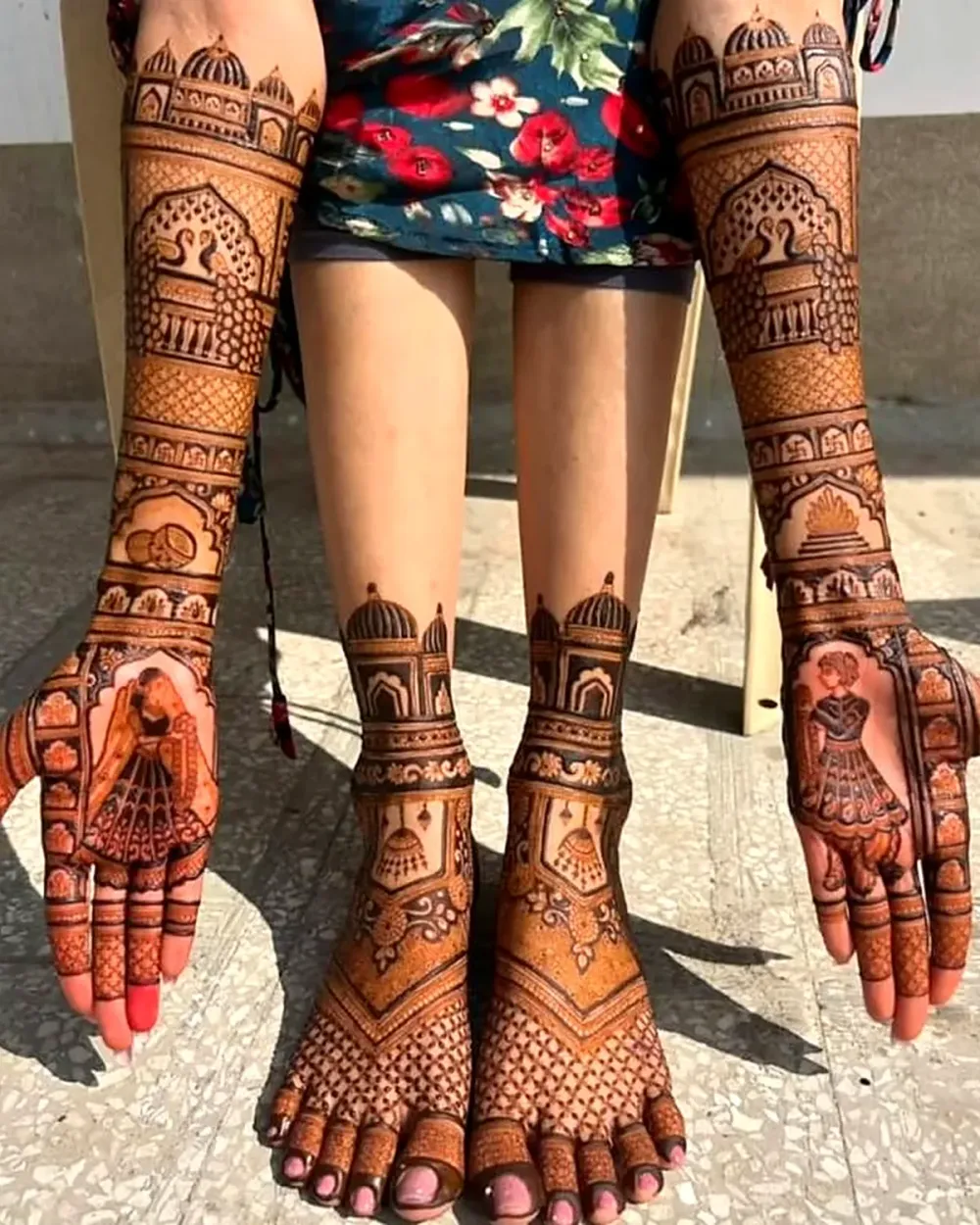
Coverage decides everything else, including the time it takes and the price. There are three common levels:
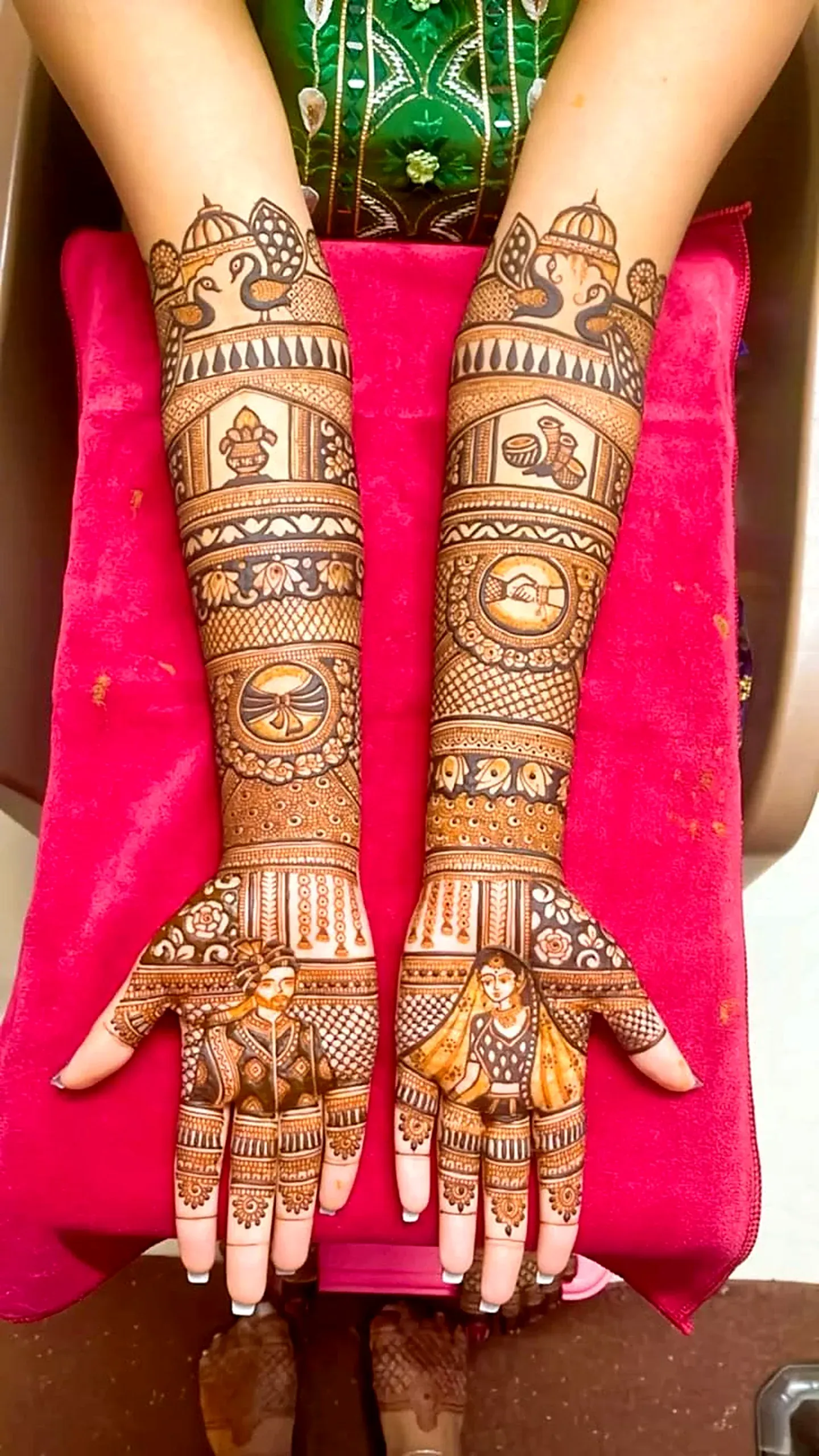
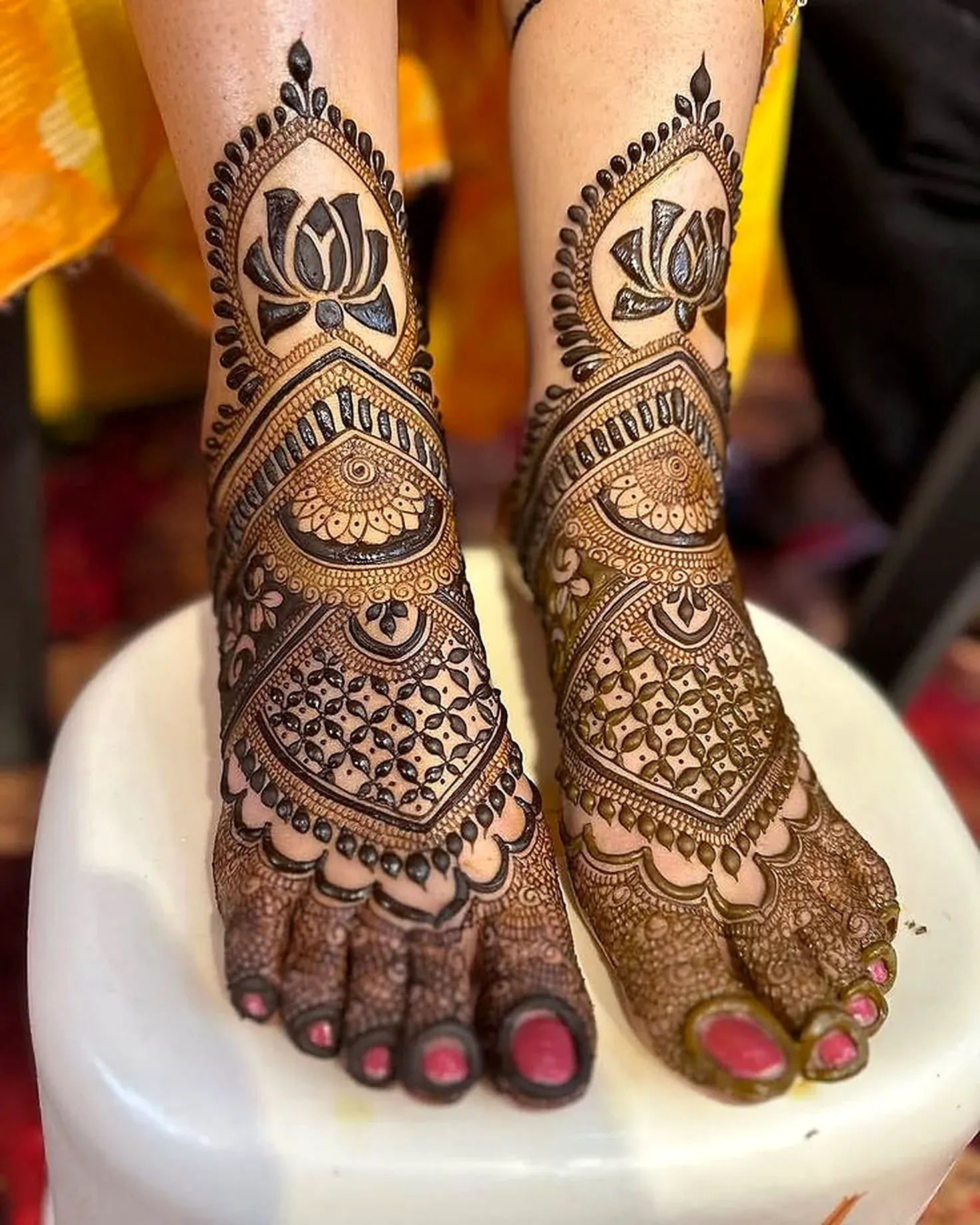
- Full bridal: front and back of the hands up to the elbow, plus the feet. This is the traditional Punjabi look, and it has room for figures and scenes.
- Hands to the wrist or mid-forearm, with lighter feet: this still looks clearly bridal and is easier to sit through.
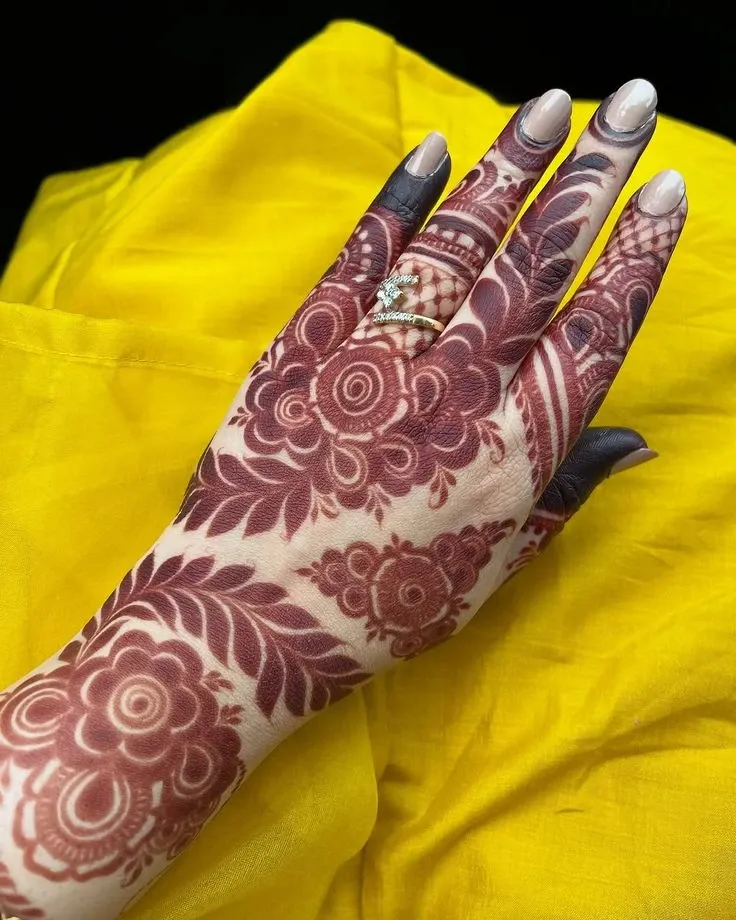
- Minimal bridal: fine work on the palms and fingers, with a lot of open skin. It suits brides who wear little jewellery or want a modern look.
If you’re unsure, decide what you’ll be wearing on your wrists. Heavy chooda and kaleere cover most of the forearm, so the most detailed part of the design should sit on the palms and fingers, where it will show in photos.
Shopping for a roka or sagai rather than the wedding? That calls for a lighter set. See engagement mehndi.
2. Pick one main theme
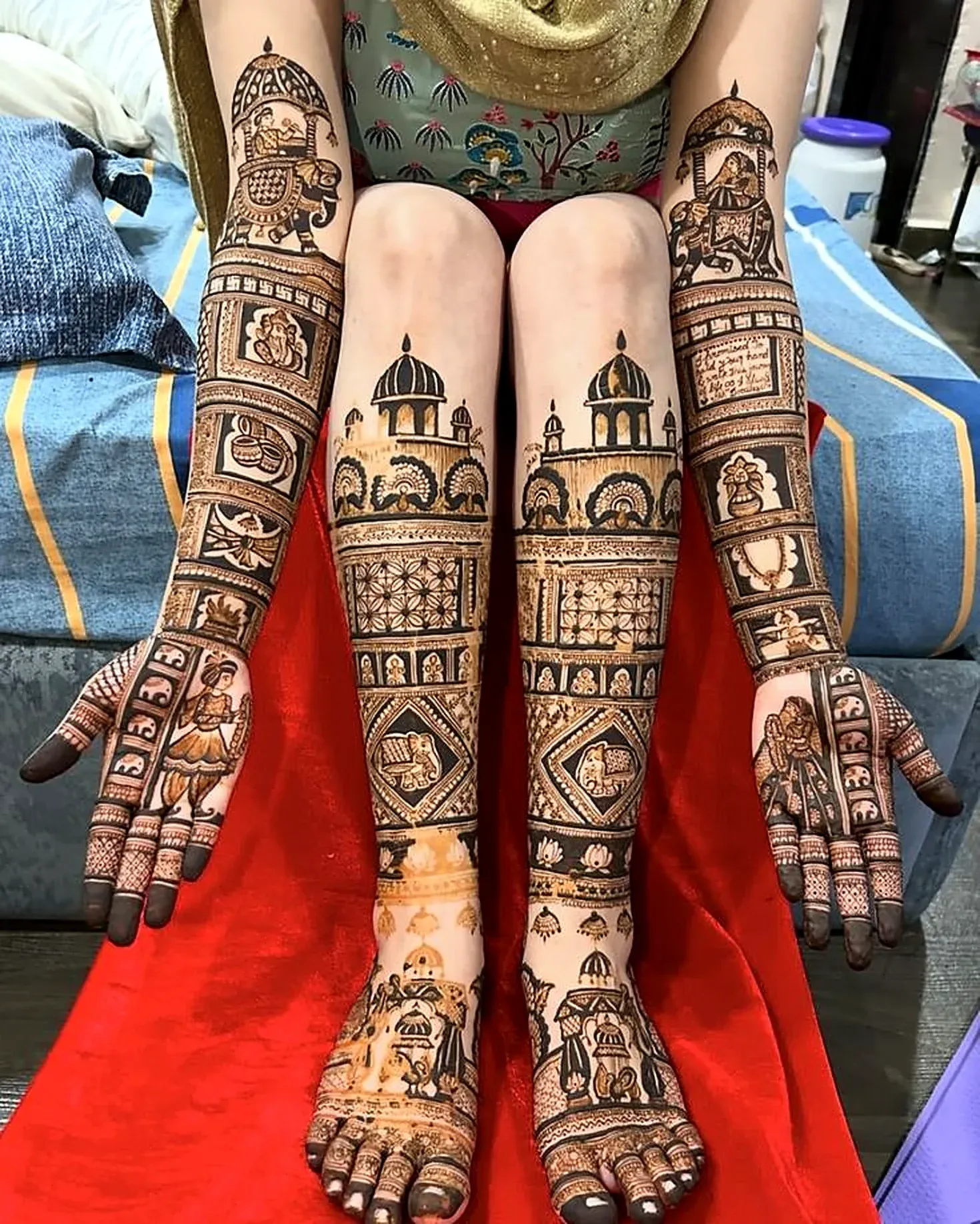
A bridal design reads well when one idea runs through it. Choose the theme that means the most to you, and let smaller motifs fill around it. Here is what the traditional motifs stand for:
| Motif | What it stands for | Good placement |
|---|---|---|
| Dulha-dulhan figures | The couple, the wedding itself | The centre of both palms, facing each other |
| Doli and palace (mehal) | The bride's journey to her new home | Palms or the inner forearm |
| Peacock | Love and beauty | The palm centre or the back of the hand |
| Elephant (hathi) | Good fortune and a royal welcome | The forearms, as a procession |
| Kalash | Prosperity and a full home | The wrist or the palm base |
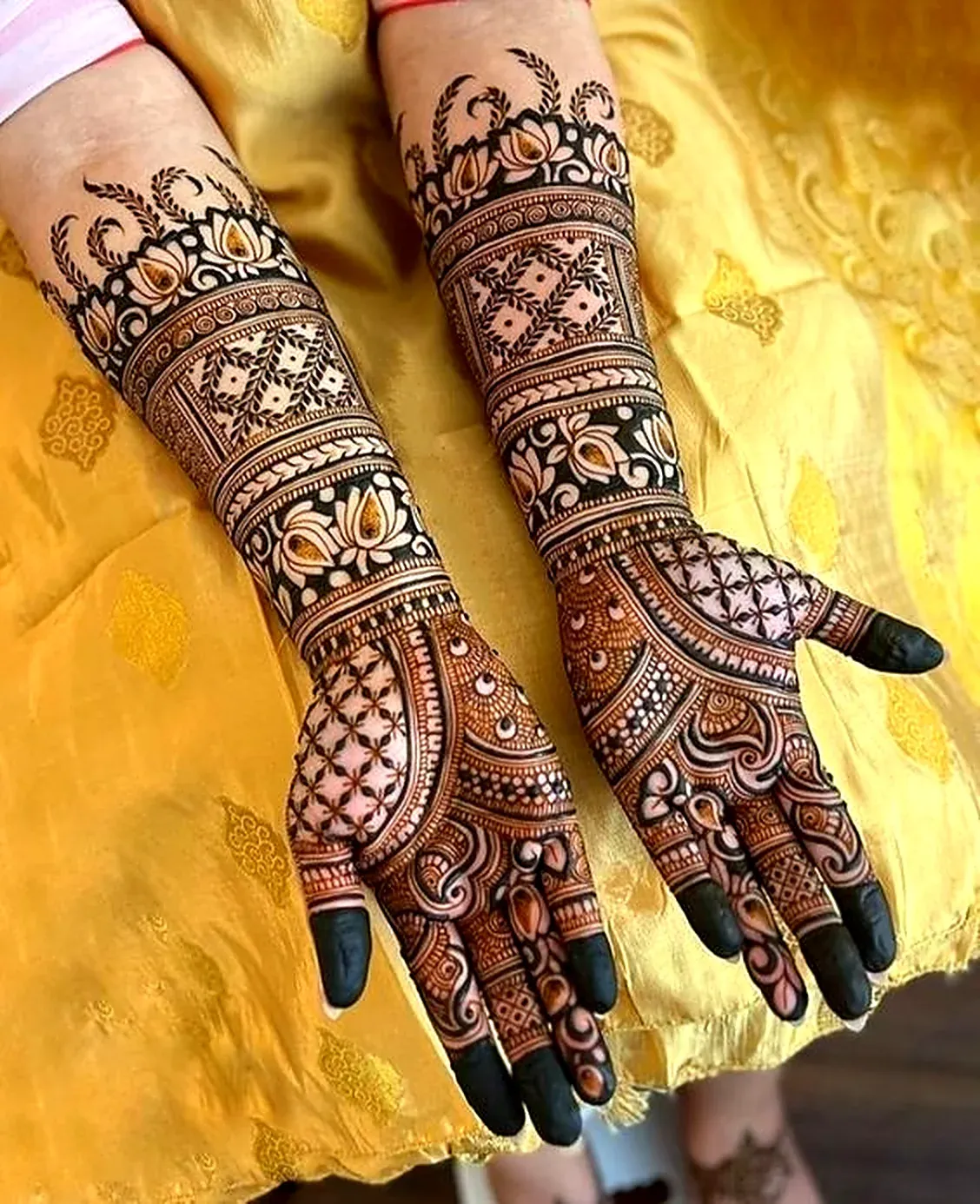
| Lotus | Purity and new beginnings | The feet and the centre of the back of the hand |
Two themes, for example a couple on the palms with peacocks on the back, work well. Four or five themes on one pair of hands start to look crowded. You can see these motifs in real work in the bridal mehndi designs gallery.
3. Make it work with your outfit
- A heavily embroidered lehenga goes well with dense, fine work and thin lines.
- A plain or pastel outfit can carry bolder motifs and more open space.
- A red or maroon outfit: most designs suit it. Just keep some open skin so the mehndi doesn’t merge into the fabric in photos.
Show the artist a photo of your lehenga when you discuss the design. It helps more than any reference picture.
4. Think about the shape of your hands
- Short fingers or small hands: long vertical patterns on the fingers and a design that runs up the wrist make the hands look longer. Avoid big round motifs that fill the whole palm.
- Long fingers: finger bands and horizontal lines look balanced.
- Wide palms: a single big central motif, such as a mandala, lotus or couple, fills the space neatly.
This is where a good artist earns their fee. The same reference picture should look different on two different brides.
5. Palms and back: give each side a job
Your palms are what you show during the rituals and in photos. Put the main story there: the couple, the doli, the date. Use the back of the hands for pattern work like jaal, floral bands or peacocks, so the design looks rich from every angle without repeating itself.
6. Bring references the right way
- 3 to 5 photos are enough. More than that and every design starts to look the same.
- Mark what you like in each one: “this border”, “these fingers”. You don’t have to like the whole design.
- Ask the artist to put the pieces together into one design for your hands.
Found a few designs you like? Send them on WhatsApp to +91 98781 62511 along with your wedding date.
Send designs on WhatsAppSee bridal mehndi from ₹3,100 for prices and booking, or read how to make your mehndi dark for the day itself.
Bridal design questions
Which mehndi motifs are considered lucky for a bride?
Traditionally the kalash, the elephant, the lotus and the peacock are seen as good omens for a new marriage. Many brides combine one of these with dulha-dulhan figures on the palms.
Does fine or bold mehndi look better in wedding photos?
Fine, detailed work looks best in close-ups of the hands. Bold work with open space shows up better in wide shots from a distance. A mix works well: fine work on the palms, bolder patterns on the back of the hands.
Is minimal bridal mehndi a good idea?
Yes, if it suits your style and your jewellery. A minimal design still needs to be planned carefully, because with less pattern every line is visible.
Chhoti ungliyon ke liye kaunsa bridal design achha lagta hai?
Ungliyon pe lambi, seedhi lines wala design lo, jo kalai tak jaye. Isse haath lambe dikhte hain. Pure palm ko bhara hua bada gol design avoid karo.
Lehenga ke hisaab se mehndi design kaise chunein?
Heavy kaam wale lehenge ke saath fine, ghana design achha lagta hai. Simple ya pastel lehenge ke saath bold design aur thodi khaali jagah rakho. Design discuss karte waqt lehenge ki photo dikha do.
Chooda pehenna hai to mehndi kahan tak lagwayein?
Chooda aur kaleere forearm ka kaafi hissa dhak lete hain. Isliye sabse zyada detail palm aur ungliyon pe rakho, wahi photos mein dikhta hai.
More mehndi tips
Send Vijay your designs
Found a few designs you like? Send them on WhatsApp to +91 98781 62511 along with your wedding date. Vijay will suggest how to put them together for your hands.